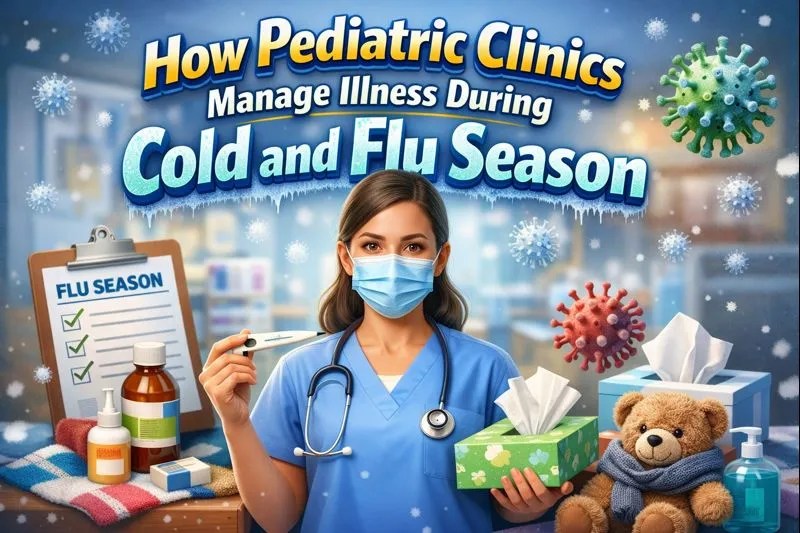
Cold and flu season places steady pressure on Pediatric Clinics across the United States. During this period, Pediatric providers treat a high number of Young Patients with cough, fever, sore throat, and breathing trouble. Clinics must act fast, follow clear systems, and keep care simple to protect children and families. This article explains how Pediatric Clinics manage illness during Cold and Flu Season using clear steps, direct care methods, and practical safety rules.
Understanding Cold and Flu Season in Pediatric Care
Cold and Flu Season usually starts in fall and lasts through early spring. Viruses spread fast in schools, daycare centers, and public places. Young Patients have weaker immune systems, so they catch infections more often than adults. Pediatric Clinics expect higher visit volumes during this time and plan care ahead.
Providers watch illness trends early in the season. They track fever cases, flu test results, and respiratory symptoms. This tracking helps clinics adjust staffing, supplies, and appointment flow. Clear planning helps clinics treat Pediatric cases without delays.
Parents often worry when children show symptoms. Pediatric staff focus on calm communication. They explain what signs matter and which symptoms can stay under home care. This clear guidance reduces panic and limits unnecessary clinic visits.
How Pediatric Clinics Prepare Before Cold and Flu Season
Preparation starts months before cold and flu season begins, as pediatric clinics study illness trends and adjust care plans based on previous years. Clinics secure vaccines, testing kits, and essential medicines well in advance to avoid shortages during peak months. This planning approach reflects the same proactive, family-focused care model followed by Mt Spokane Pediatrics, where evidence-based decisions support consistent and timely treatment for children.
Staff readiness is another priority. Pediatric nurses and doctors review symptom screening steps, triage guidelines, and infection control routines. Teams reinforce hand hygiene, proper mask use, and regular room sanitation to reduce the spread of illness within the clinic.
Scheduling systems also adapt to seasonal demand. Many pediatric clinics offer same-day sick visits and extend phone support hours. These changes help young patients receive prompt care and reduce wait times during high-volume periods.
Intake and Triage for Young Patients
Initial Screening at Arrival
When Young Patients arrive, staff start screening right away. They check temperature, breathing rate, and general alertness. This step helps staff spot severe illness early.
Children with fever, cough, or flu like signs often move to separate waiting areas. Some Pediatric Clinics ask families to wait in cars until rooms are ready. This reduces virus spread inside the clinic.
Phone and Virtual Triage
Many Pediatric Clinics use phone or video screening before in person visits. Staff ask parents clear questions about fever length, eating habits, and breathing effort. Based on answers, clinics decide if the child needs a visit or home care advice.
This approach helps manage patient flow during Cold and Flu Season. It also protects healthy children from exposure.
Diagnosis Methods Used During Cold and Flu Season
Pediatric Clinics rely on simple and proven tools to diagnose illness. Doctors listen to lungs, check ears and throat, and observe behavior. For Young Patients, behavior often gives strong clues. A child who plays and responds usually has mild illness.
Flu tests help confirm infection when symptoms match. Some clinics also test for RSV or strep throat. Providers avoid unnecessary tests to reduce stress on children.
Clear diagnosis helps guide treatment plans. Pediatric providers explain results using plain language so parents understand next steps.
Treatment Approaches for Pediatric Illness
Managing Mild Illness
Most cold cases need home care only. Pediatric Clinics guide parents on rest, fluids, and fever control. Providers explain safe dosing for medicine based on age and weight.
Clear instructions help parents avoid errors. Clinics often share written care plans to support families after visits.
Treating Flu and More Serious Cases
When flu tests come back positive, Pediatric providers may prescribe antiviral medicine for some Young Patients. Timing matters, so early visits help improve outcomes.
For children with breathing trouble, dehydration, or long lasting fever, clinics act fast. Some patients receive breathing treatments or fluids. If needed, providers refer children to hospitals.
Infection Control Inside Pediatric Clinics
Preventing virus spread is a top goal during Cold and Flu Season. Pediatric Clinics clean rooms after each sick visit. High touch surfaces receive frequent wiping.
Staff wear masks during illness peaks. Hand washing rules stay strict. Clinics place sanitizer stations in exam rooms and hallways.
Families also play a role. Pediatric staff remind parents to keep sick siblings at home when possible. This shared effort keeps clinics safer for all Young Patients.
Vaccination Strategies in Pediatric Clinics
Vaccines play a key role during Cold and Flu Season. Pediatric Clinics promote flu shots early each year. Providers explain how vaccines reduce illness severity and hospital visits.
Clinics often host vaccine days with quick visits. Some offer walk in flu shots to improve access. Clear messaging helps parents understand vaccine safety.
For Young Patients with chronic conditions, vaccines matter even more. Pediatric providers track records and remind families when shots are due.
Supporting Parents During Cold and Flu Season
Parents often feel stress when children fall sick. Pediatric Clinics focus on support and education. Providers explain warning signs that need urgent care, such as fast breathing or low energy.
Clinics also share tips to prevent illness at home. These tips include hand washing, surface cleaning, and keeping sick children home from school.
Clear guidance builds trust. When parents understand what to watch for, they feel more confident managing care.
Managing High Patient Volume in Pediatric Clinics
Cold and Flu Season brings long days for Pediatric Clinics. Clinics adjust schedules to meet demand. Many add evening or weekend hours.
Teamwork helps clinics function well. Nurses, doctors, and front desk staff follow clear roles. This structure keeps visits smooth even during busy weeks.
Some clinics use group messaging systems to update families about wait times or care tips. This reduces frustration and improves visit flow.
Care for High Risk Young Patients
Some Young Patients face higher risk during Cold and Flu Season. These include infants, children with asthma, and those with immune conditions.
Pediatric Clinics monitor these patients closely. Providers may suggest early visits at the first sign of illness. Clinics also offer direct phone access for urgent questions.
Care plans for high risk children stay clear and specific. Parents receive written steps for managing symptoms and knowing when to seek help.
Communication Between Pediatric Clinics and Schools
Many Pediatric Clinics work with schools and daycare centers. They share guidance on illness signs and return to school rules.
Clear communication helps limit outbreaks. Schools learn when children should stay home and when they can return safely. This partnership supports community health during Cold and Flu Season.
Post Illness Follow Up Care
After illness, Pediatric Clinics check recovery. Some children need follow up visits to confirm full healing. Providers assess breathing, energy level, and appetite.
For flu cases, clinics watch for secondary infections like ear infections. Early follow up helps prevent complications.
Parents receive clear advice on returning to normal activity. Pediatric providers stress gradual return to school and sports.
Long Term Planning Beyond Cold and Flu Season
Pediatric Clinics review each Cold and Flu Season after it ends. Teams assess what worked well and what needs change. This review improves care for the next year.
Clinics update care plans, supply lists, and staff training based on real data. This cycle strengthens Pediatric care year after year.
Conclusion
Pediatric Clinics manage illness during Cold and Flu Season through planning, clear systems, and direct care. From early preparation to follow up visits, each step focuses on protecting Young Patients. Clinics rely on simple screening, clear diagnosis, and proven treatment methods. Strong infection control and parent support help reduce stress and improve outcomes. Through teamwork and clear communication, Pediatric Clinics continue to provide steady care during the busiest months of the year.
 Life Spectrum