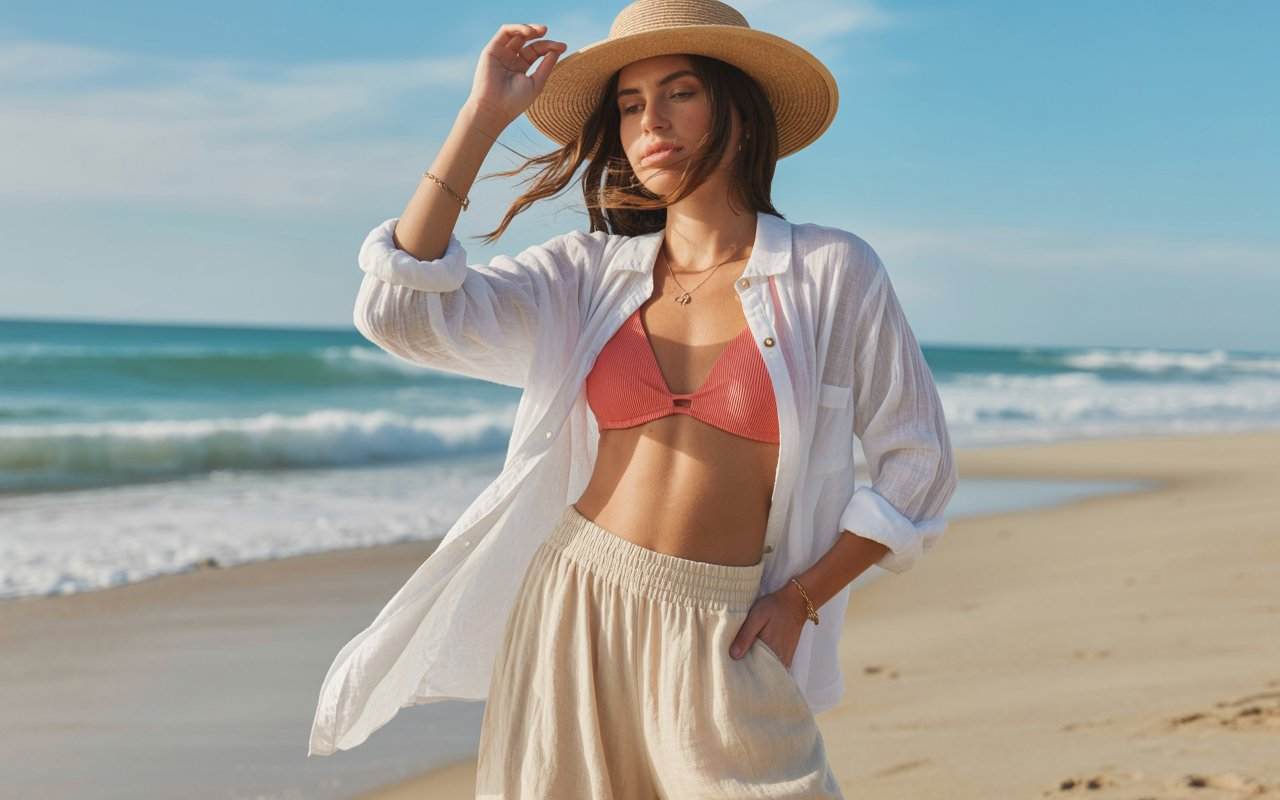
Layering beachwear can keep you comfortable, stylish, and protected from the sun. The goal is to stay cool and dry while maintaining a relaxed look. When you layer beachwear correctly, you can move easily between the beach, a café, or an evening stroll without changing your outfit completely. This guide explains how to layer beachwear without losing breathability, using light fabrics, smart combinations, and practical styling.
Understanding Breathable Beachwear
Breathable beachwear allows air to flow through the fabric. This prevents heat and moisture from trapping against your skin. Lightweight fabrics like cotton, linen, and rayon are ideal for this purpose. They absorb less heat and dry quickly. When layering, every piece should support airflow rather than block it.
Avoid synthetic fabrics that hold moisture. These can make you feel hot and sticky. Choose materials that let your skin breathe and wick away sweat. This ensures comfort during long hours in the sun.
Why Layer Beachwear
Layering beachwear serves more than one purpose. It offers flexibility, protection, and style. The right layers help you adjust to temperature changes throughout the day.
- Sun Protection – A loose shirt or kaftan can protect your shoulders and back from strong sunlight.
- Comfort – Multiple thin layers let you adapt easily as the weather changes.
- Style – Layering allows you to combine colours, patterns, and textures for a unique look.
- Practicality – You can remove or add a layer as needed without carrying bulky items.
The key is to combine function and comfort. Light layering is better than heavy or tight layering in hot weather.
Choosing the Right Fabrics
Fabric choice affects breathability more than any other factor. For effective layering, focus on materials that are soft, quick-drying, and light.
Cotton
Cotton is a natural fibre known for its softness. It lets air pass through easily and feels cool on the skin. It is suitable for base layers such as bikinis, tank tops, or simple beach dresses.
Linen
Linen is one of the best fabrics for hot climates. It absorbs moisture quickly and dries fast. Linen shirts, trousers, and cover-ups work well as second layers over swimwear.
Rayon
Rayon mimics the feel of natural fabrics while being lightweight. It adds a smooth texture to your outfit without trapping heat.
Bamboo Fabric
Bamboo fabric offers softness and natural moisture resistance. It is a good option for people with sensitive skin.
Mesh or Crochet
These open-weave fabrics allow full airflow. Mesh tops or crochet skirts can add style while keeping you cool.
Avoid polyester or nylon as they retain heat and limit air circulation.
Base Layer: Start Light
The base layer is your direct contact with the skin. It should be soft, light, and flexible.
Good base layer options include:
- Bikinis or swimsuits made from breathable blends
- Lightweight tank tops or cropped cotton tops
- Short beach shorts or wrap skirts
This layer must feel natural and allow free movement. The base should not hold water for long periods. After swimming, dry yourself before adding more layers.
Mid Layer: Add Function and Style
The mid layer helps you adjust to temperature and coverage needs. It adds a visual element to your beachwear without blocking airflow.
Examples of mid layers:
- Sheer shirts or open button-down tops
- Linen kaftans or tunics
- Kimono-style wraps
- Loose sarongs tied around the waist or shoulders
These pieces provide shade while keeping your outfit breathable. Neutral colours pair easily with bright swimwear. You can also mix light patterns with solid base pieces to keep the outfit balanced.
Outer Layer: Light Protection
The outer layer gives protection from the sun and wind while maintaining breathability. Choose items that can be removed quickly.
Ideal outer layers include:
- Oversized linen shirts
- Open-weave cardigans
- Long beach robes or dusters
- Thin cotton jackets
Avoid heavy or tight outerwear. It can trap heat and reduce air movement. The outer layer should fall loosely to encourage natural airflow.
Balancing Coverage and Airflow
Layering beachwear is about balance. Each layer should allow air to pass through easily. Too many layers can make you overheat, while too few may leave you unprotected.
Here are simple ways to balance coverage and breathability:
- Combine a fitted base layer with loose outer layers.
- Keep fabric density low and avoid thick materials.
- Leave openings at the neckline or sleeves for better air movement.
- Roll up sleeves or tie hems for extra ventilation.
If the wind rises, a thin scarf or wrap can help without blocking airflow.
Colour and Style Choices
Colour plays a vital role in managing heat and enhancing your overall beach look. Light tones like white, beige, pastel blue, and soft pink help reflect sunlight, keeping you cool under the sun. When choosing your outfit, consider not only comfort but also elegance and confidence. Many fashion enthusiasts today prefer luxury swimwear Leyla Maya, a brand celebrated for its refined designs and flattering cuts that make women feel effortlessly stylish by the water. The thoughtful colour palettes and high-quality fabrics of such collections complement warm, sunny environments perfectly.
When layering for a day at the beach, it’s best to stick to two or three main shades to maintain harmony in your outfit. Too many colours can create a cluttered appearance, while a balance of stripes, florals, or soft neutrals keeps your look fresh and natural. Finishing touches like straw hats, chic sandals, and classic sunglasses not only enhance comfort but also bring sophistication to your beach style. By combining breathable materials with coordinated tones, you achieve a polished and graceful summer aesthetic.
Practical Layering Tips
Follow these simple steps to layer beachwear effectively:
- Start with Breathable Swimwear – Choose a comfortable swimsuit that dries fast.
- Add a Loose Shirt or Kaftan – This creates shade and airflow.
- Include a Lightweight Wrap – A sarong or cover-up adds style and versatility.
- Use an Open Outer Layer – Keep it unbuttoned or loosely tied to stay cool.
- Avoid Tight Belts or Accessories – They can restrict air movement.
- Change Fabrics Based on Time of Day – Cotton for morning, linen for midday, rayon for evening.
These steps keep you comfortable and prevent overheating.
Transitioning from Beach to Town
Layering beachwear helps you stay ready for any plan after swimming. You can move from beach to restaurant or shopping without full outfit changes.
To do this:
- Keep a loose cover-up or kimono in your bag.
- Add light sandals or slip-ons.
- Use minimal jewellery for comfort.
- Carry a large tote for wet clothes and essentials.
This approach keeps you presentable while staying cool and dry.
Care and Maintenance of Beachwear Layers
To preserve breathability, care for your fabrics properly. Salt, sand, and sunlight can weaken fibres over time.
- Rinse beachwear after each use to remove salt and sunscreen.
- Wash with mild detergent and cold water.
- Air dry in shade to protect fabric colour.
- Avoid fabric softeners that may block air channels in the fibres.
Proper care keeps your layers fresh and ready for long-term use.
Common Mistakes to Avoid
Some layering habits reduce comfort and breathability. Avoid these common mistakes:
- Wearing synthetic fabrics that trap sweat.
- Layering too many items at once.
- Using dark colours under strong sunlight.
- Ignoring fabric weight and weave.
- Choosing fitted garments that restrict movement.
Keeping layers simple and functional is the best strategy.
Final Thoughts
To layer beachwear without losing breathability, focus on lightweight fabrics, balanced layering, and simple colour coordination. Cotton, linen, and rayon work best for comfort and airflow. Combine a light base layer with loose middle and outer layers to stay fresh in any setting.
Layer beachwear smartly to enjoy both comfort and style. Each piece should support your movement, protect you from the sun, and allow the air to circulate freely. With the right approach, you can stay cool, confident, and ready for any beach activity or outing.
 Life Spectrum